Find the right part for your vehicle
Add your vehicle and shop with confidence
Sprockets











Everything you Need to Know about the Front Sprocket
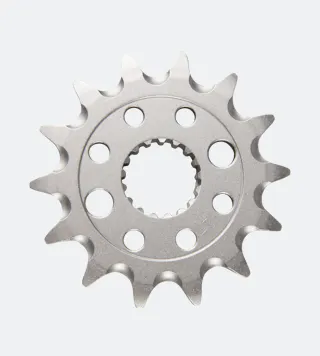
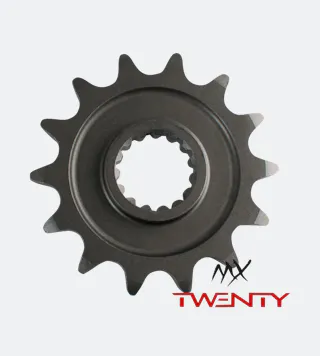
The front sprocket is the unsung hero of the drivetrain. It is hidden behind an engine cover on the left side of the motor and takes an incredible amount of abuse behind the scenes. Don’t worry; it’s a tough component and one that is more than capable of handling everything in its stride. So does this mean we can ignore it altogether? The simple answer is no. Due to the vast difference in size compared to the rear, the front sprocket will wear approximately three times faster.
Faster Wear - The prime reason is that the front sprocket will rotate many more times over the same distance as its larger rear counterpart. Furthermore, the engine cover, which keeps your ankle away from fast-moving parts, also acts as a gunge collector for any mud dirt and sand jammed behind.
This action creates a perfect storm. The rapidly moving sprocket is constantly under stress from the chain. It is this contact that also grinds away at the teeth thanks to the debris.
For these reasons, it’s wise to get into the habit of removing the sprocket cover whenever you tension the chain. Don’t delay doing this until you notice wear on the rear sprocket. Even if the teeth on the front sprocket look good, it’s wise at the bare minimum to clean out the gunge to help prolong its life.
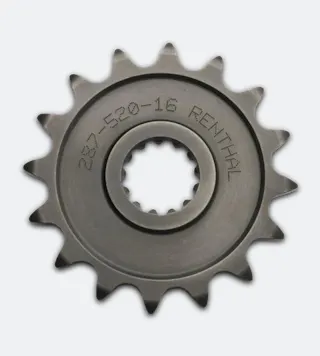
The front sprocket, also called the countershaft or transmission sprocket, is often made from low carbon steel for smaller sizes and medium carbon steel for larger sprockets. This type of steel has high tensile strength and can withstand sustained force without either bending or chipping.
What to look for in a front sprocket - When searching the 24MX storefront for a front sprocket, you may come across descriptions such as Nickel-Chrome-Molybdenum, Chromoly or SCM415. These are grades of steel composed of different materials that offer varying degrees of hardness.
If most front sprockets are of hardened steel, why are some triple the price of others? As with everything in life, it all comes down to quality. Less expensive sprockets are a no-nonsense alternative to Original Equipment Manufacturer (OEM) parts that will do an excellent job for the motocrosser on a tight budget.
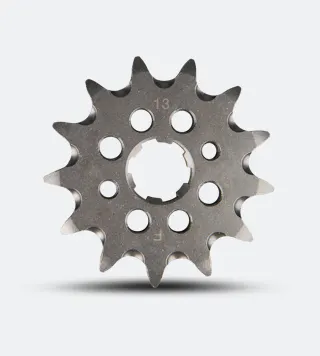
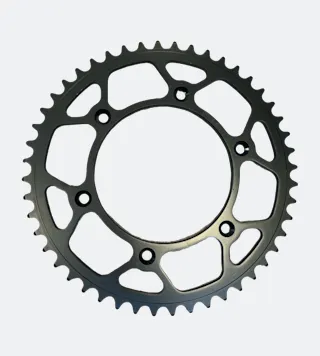
The more expensive sprockets on the market may reflect higher-grade materials but of greater importance are the additional features they offer. These features include grooves and extra holes to reduce weight. Small indentations at the base of every tooth can also help prevent dirt and grit build-up.
Get into Gear: The Role of the Rear Sprocket
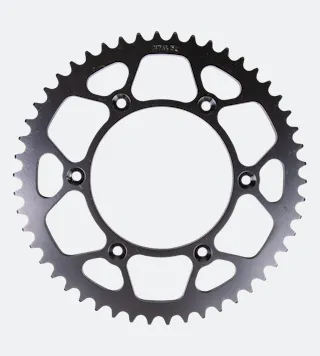
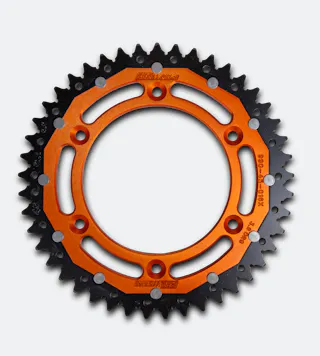
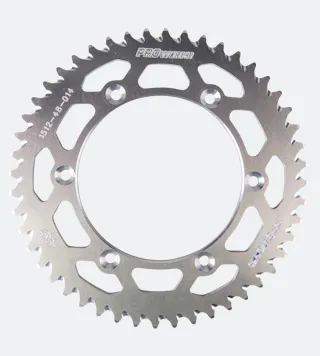
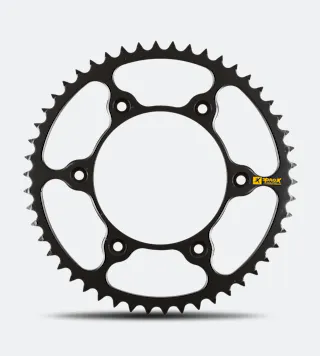
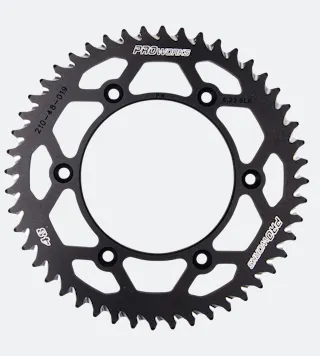
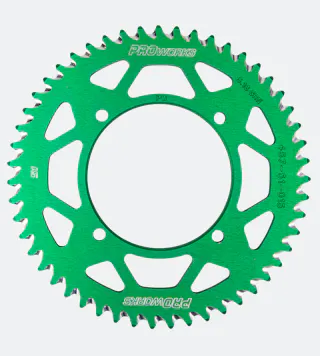
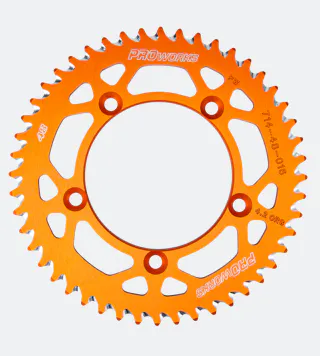
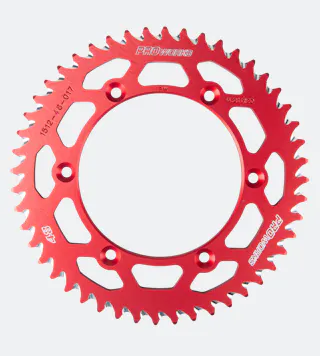
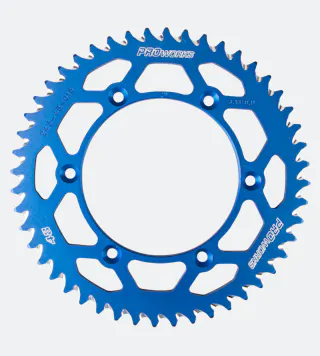
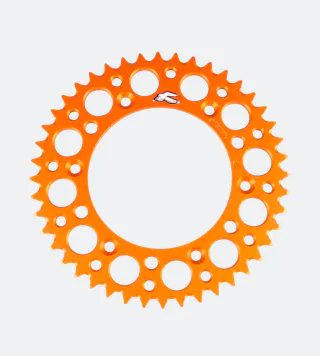
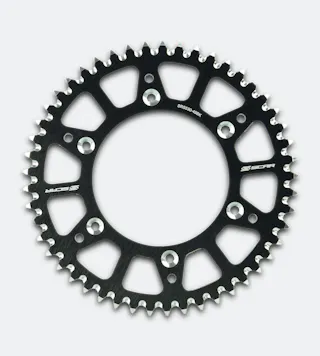
Apart from its obvious role as a vital part of the drivetrain, the rear sprocket is also a key visual feature of the back wheel. Rear sprockets are available in a range of striking finishes and colours. Don’t worry, though; it’s not a case of all show and no go.
Rear sprockets are available to buy in three types of material. These are hardened steel, aluminium and a combination of the two, known as interlink sprockets.
Hardened Steel: This material is the most common for rear sprockets. As with the much smaller front, rear hardened steel sprockets have slight variations in composition and hardening techniques.
These differences, especially in higher-grade steel, equate to a longer sprocket life, which reflects in their price point. In addition, the rear sprocket differs because they aren’t ever left ‘blank.’ In other words, all rear sprockets undergo heavy machining to create a uniform pattern around the inner sprocket circumference.
Manufacturers create these patterns primarily to save weight as extra weight adds resistance, meaning the engine must work harder to turn the wheel. In the real world, the resulting weight and resistance savings from this machining may be minimal but with races won by fractions of a second, every little helps.
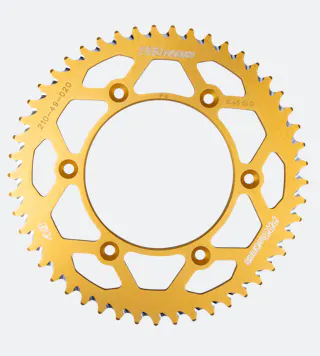
Aluminium Sprockets: This type of rear sprocket is quite rare but is available in the 24MX line-up. These sprockets represent the ultimate in weight saving.
Aluminium rear sprockets, even though made from aircraft-grade aluminium, wear out faster than hardened steel. With steel being up to 200% denser than aluminium, the weight savings are apparent. What’s more, for competitive riders, high-performance components are essential.
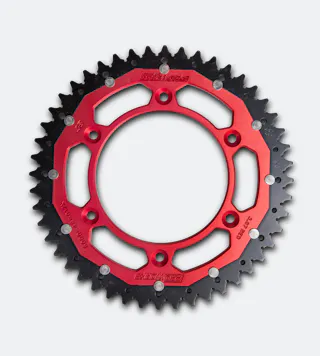
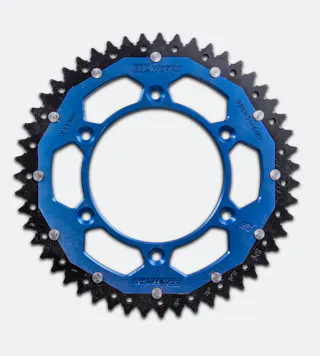
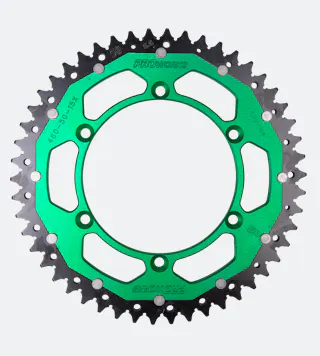
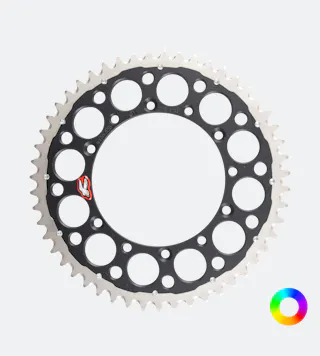
Combination Sprockets: These sprockets, also called interlink or twin-ring, consist of a hardened steel outer sprocket combined with an aluminium inner ring.
This combination offers the best of both worlds, giving up to three times the lifespan of an all aluminium sprocket. The combo’s lightweight inner ring also means in size for size comparison, you can realise a weight saving of around 70% compared to its steel equivalent.